
Automatic Washing Machine PCB Function: How It Works and Common Problems|Siprratech
Introduction
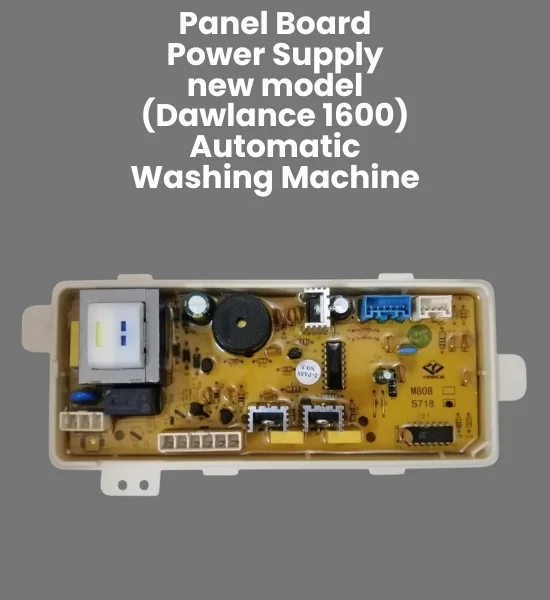
The PCB (Printed Circuit Board) is one of the most important components of an automatic washing machine. It works as the machine’s electronic control center, managing different washing operations such as water filling, washing, rinsing, draining, and spinning.
Modern automatic washing machines use a PCB to control electrical components and follow the selected washing program. If the PCB develops a fault, the washing machine may stop working properly or fail to complete its washing cycle.
What Is a Washing Machine PCB?
A washing machine PCB is an electronic circuit board that receives signals from sensors, buttons, and other components. It processes this information and controls the operation of the machine.
Depending on the model, a washing machine may have a main control PCB, a display PCB, or an inverter control board. These boards work together to provide automatic washing functions.
Main Functions of an Automatic Washing Machine PCB
1. Controls the Washing Program
The PCB manages the selected washing program, including normal wash, quick wash, delicate wash, and heavy-duty wash. It controls the sequence and duration of each stage according to the program and sensor inputs.
2. Controls the Water Inlet Valve
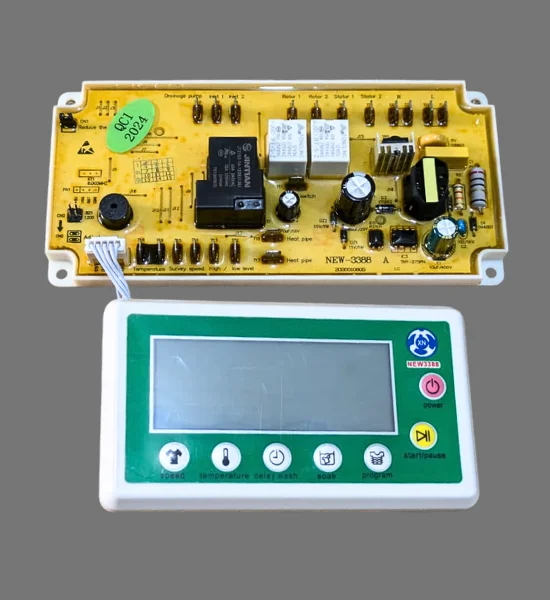
PCB wit an universal PCB
When a washing cycle starts, the PCB activates the water inlet valve to allow water into the drum or tub. It uses information from the water-level sensor or pressure sensor to determine when the required water level has been reached.
3. Controls the Washing Motor
The PCB manages motor operation during washing and spinning. Depending on the machine design, it may control motor direction, speed, and starting or stopping. In inverter models, a separate inverter board or integrated motor-control circuit may perform these functions.
4. Manages the Drain Pump
During the draining stage, the PCB activates the drain pump to remove dirty water from the washing machine. It coordinates draining with other stages of the wash cycle.
5. Controls the Rinsing Process
After the main wash, the PCB manages the rinsing sequence. It may operate the inlet valve to refill the machine, control the motor, and activate the drain pump as required by the selected program.
6. Controls the Spin Cycle
The PCB coordinates the high-speed spin cycle to remove excess water from clothes. It may use signals from imbalance, speed, or other sensors to adjust the spin operation or prevent unsafe spinning.
7. Receives Signals from Sensors
The PCB receives information from various sensors, depending on the model, including:
- Water-level or pressure sensor
- Motor speed sensor
- Door-lock or lid-switch system
- Temperature sensor in applicable models
- Imbalance detection system
These signals help the PCB determine whether the machine can safely continue operating.
8. Manages the Display and Buttons
The PCB processes user commands entered through the control panel. It communicates with the display to show the selected program, remaining time, operating status, or error codes.
9. Provides Safety Control
The PCB can prevent certain operations when the door is unlocked, the water level is unsuitable, or a fault is detected. The exact safety functions depend on the washing machine model.
Common Signs of a Faulty Washing Machine PCB
A damaged PCB can cause several problems, including:
- The washing machine does not turn on.
- The display remains blank or behaves abnormally.
- The machine does not start after the program is selected.
- Water does not enter even when the water supply is available.
- The motor does not operate during washing or spinning.
- The washing machine stops in the middle of a cycle.
- The machine displays recurring error codes.
- The buttons or program selector do not respond correctly.
Important: These symptoms do not always mean the PCB is faulty. A defective door lock, inlet valve, drain pump, sensor, wiring connection, power supply, or motor can cause similar problems.
How to Check a Washing Machine PCB
Before replacing the PCB, a technician should follow a systematic diagnostic process:
- Check the power supply: Verify the socket, plug, power cord, and relevant supply connections.
- Inspect the external connections: Look for loose connectors, damaged wires, or signs of corrosion.
- Check the error code: Consult the manufacturer’s service manual for the specific model.
- Test related components: Check the door lock, inlet valve, sensors, drain pump, and motor as appropriate.
- Inspect the PCB: Look for burnt components, damaged tracks, corrosion, or signs of overheating.
- Confirm the fault: Use the manufacturer’s diagnostic procedure to determine whether the PCB needs repair or replacement.
Electrical testing should be performed by a qualified technician. Disconnect the washing machine from the mains before opening it. Some boards can retain dangerous electrical charge even after the machine has been unplugged.
Can a Washing Machine PCB Be Repaired?
In some cases, a faulty PCB can be repaired by an experienced electronics technician. Repair may be possible when the damage is limited to a replaceable component or a damaged connection.
However, replacement may be necessary if the board has extensive damage, a failed processor, severe corrosion, or other faults that cannot be repaired reliably.
Always use a compatible PCB with the correct model and part number. Some replacement boards also require programming or configuration.
How to Protect a Washing Machine PCB
Follow these maintenance tips to help protect the electronic control board:
- Use a properly grounded electrical outlet.
- Consider suitable surge protection where voltage fluctuations are common.
- Keep water away from the control panel and electronic components.
- Repair water leaks promptly.
- Avoid operating the machine with damaged wiring.
- Do not overload the washing machine.
- Arrange professional inspection if the machine repeatedly trips the electrical supply or shows signs of burning.
Conclusion
The PCB is the electronic control center of an automatic washing machine. It coordinates the washing program, water inlet, motor, drain pump, rinsing, spinning, sensors, and display functions. Proper diagnosis is essential because many washing machine problems can resemble a PCB failure.
For reliable washing machine troubleshooting, repair, and maintenance, contact Siprra Tech for professional appliance repair assistance.
Frequently Asked Questions
What does PCB stand for in a washing machine?
PCB stands for Printed Circuit Board. It is an electronic board that controls and coordinates the machine’s operations.
Can a washing machine work without a PCB?
Most modern fully automatic washing machines cannot operate normally without their required control electronics.
What causes a washing machine PCB to fail?
Common causes include voltage surges, moisture, corrosion, overheating, damaged wiring, and failure of electronic components.
How much does washing machine PCB replacement cost?
The cost depends on the brand, model, board type, availability of spare parts, and repair charges. Ask a technician for a model-specific estimate.
Should I repair or replace a faulty PCB?
The decision depends on the nature of the damage, the cost of repair, parts availability, and the reliability of the repaired board.

Front side of a PCB of washing machine.